
Counseling for Parents & Families
Support for parents and families navigating anxiety, emotional distress, family conflict, and gender-related concerns.
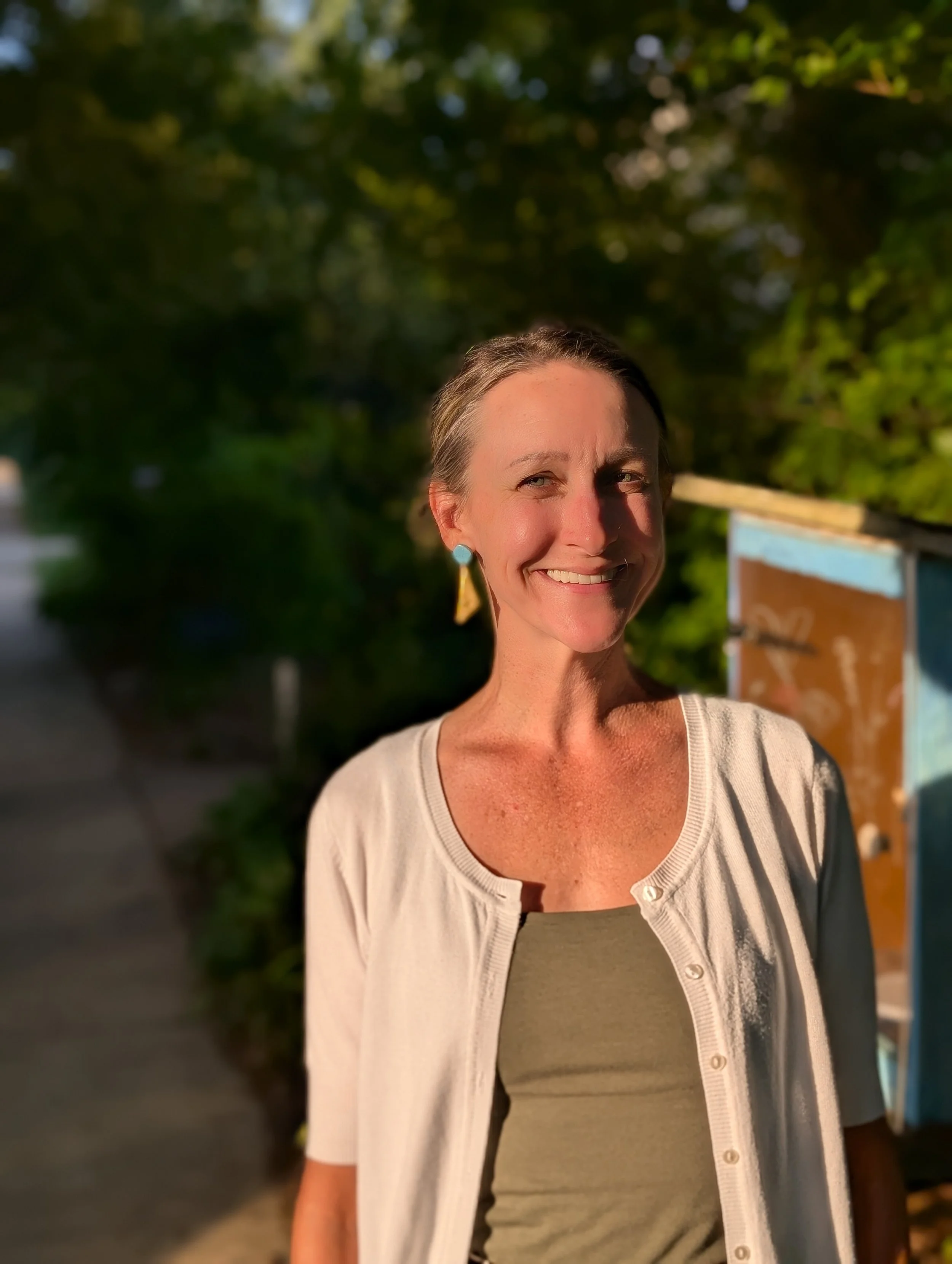
Welcome — I’m glad you’re here.
If you're a parent of an adolescent navigating questions of gender, you may be feeling uncertain about how to help — or even unsure of what your role should be. You might be worried about your child, about your relationship with them, or about making the wrong move during a period that feels high-stakes and unfamiliar. Those feelings make sense, and you don't have to figure it out alone.
I’m Kat and I am a licensed professional counselor in Pennsylvania and Florida. Over the course of my career, I've worked with adolescents and families navigating anxiety, emotional dysregulation, relationship conflict, and questions related to gender. I have experience working with highly sensitive people, gender dysphoria, detransition, and periods of questioning.
I bring nearly a decade of experience working with lesbian, gay, and bisexual youth and adults, a deep grounding in Dialectical Behavior Therapy (DBT), and nearly two decades of yoga teaching — all of which inform my belief that counseling should consider the whole person, not just a single aspect of their experience.
I believe parents are essential partners in their child's wellbeing, not obstacles to it. Whatever brings you here, and wherever your family is starting from, my goal is to support your child's growth while strengthening the relationship between you.

Parenting a struggling child can bring up fear, grief, confusion, guilt, and heartbreak — often all at once. You may feel isolated, unsure of what to say, or caught between conflicting advice about what your child needs.
There is room for all of that here. You don't have to have the answers or perform certainty.
Whether you're looking for guidance on how to support your child, or simply need a space to process what you're carrying as a parent, this work is for you too.
-
When your child is struggling, it's natural to want answers quickly. But in my experience, meaningful change rarely comes from moving fast — it comes from slowing down long enough to really understand what's happening and why.
That means looking at the bigger picture: your child's emotional life, developmental history, relationships, personality, strengths, and current circumstances. Rather than focusing narrowly on symptoms or labels, I'm interested in the whole person — and in what actually make sense for your family, rather than applying a one-size-fits-all approach.
Central to this is the relationship between you and your child. Research consistently shows that a strong parent-child connection is one of the most protective factors for struggling adolescents — and one of the most powerful things we can work on together. Even when communication has broken down or conversations have become painful, that connection can be repaired and strengthened. Connection creates safety, and safety creates room for change.
-
I work from a relational, developmental, and family-centered perspective, and I view parents and caregivers as essential partners in supporting a young person's wellbeing.
My role is not to take sides or push families toward a particular conclusion. Before offering guidance or recommendations, I take time to understand your child's history, your family's dynamics, and what you've already tried. I want to understand not just what is happening, but what this experience has been like for you — as a parent, and as a person.
From there, our work will look different for every family. Depending on your needs, this might include parent consultation, individual therapy with your child, family sessions, or some combination of these. Some parents come looking for guidance on how to support their child at home. Others are navigating a specific decision or trying to repair a relationship that has become strained. And some simply need a space to speak honestly about what they're carrying without fear of judgment.
Whatever brings you here, you can expect a process that is thoughtful rather than rushed, exploratory rather than prescriptive, and always focused on what is genuinely best for your child and your family as a whole.
-
The way I work has been shaped by years of clinical experience, formal training, and a commitment to lifelong learning. My goal is to provide thoughtful, compassionate, and evidence-informed care while remaining flexible, collaborative, and responsive to the unique needs of each individual and family.
My professional background includes:
Licensed Professional Counselor (LPC) in Pennsylvania & Florida
Over eight years of clinical experience working with children, adolescents, adults, parents, and families
M.A. in Counseling Psychology from Rosemont College
Formal training in Dialectical Behavior Therapy (DBT) through the Treatment Implementation Collaborative
Experience participating on a DBT consultation team, collaborating with fellow clinicians to strengthen skills and provide effective, compassionate care
Group Facilitator at Beyond Trans, leading free, therapist-facilitated support groups — including a dedicated group for parents — for individuals, parents, and families navigating gender transition, detransition, and questions of gender identity, offering guided discussion, reflection, and community connection
Former Board Member of Therapy First, a professional organization focused on the psychological understanding and treatment of gender-related distress
Experience in community mental health, outpatient therapy, and private practice
Over 500 hours of yoga teacher training, including specialized training in restorative, yin, chair yoga, and mindfulness-based practices
Certified Integrative Nutrition Health Coach
B.A. in Literature from West Chester University
I continue to pursue ongoing education, consultation, and professional development to stay current with research and best practices. My aim is to combine evidence-based treatment with genuine curiosity, compassion, and an individualized approach that meets each person where they are.
-
I offer a free 15-minute phone consultation so we can get a sense of whether we're a good fit — no commitment required.
Individual intake (60 minutes): $210
Individual therapy (50 minutes): $160
Family intake (60 minutes): $250
Family & couples sessions (50 minutes): $200
I am a private-pay practice and don't accept insurance directly. If you have out-of-network benefits, I can provide a superbill to submit for possible reimbursement — many clients are able to recover a portion of their fees this way.
A limited number of sliding scale spots are available. Please reach out to ask about current availability.

My work is informed by formal training in DBT, mindfulness, and psychotherapy, along with certifications in yoga and integrative health. Rather than treating these as separate disciplines, I use them to help clients understand the connection between thoughts, emotions, relationships, and the body.
FAQ: My Approach to Gender-Related Concerns
-
I approach gender the way I approach any other area of a person's inner life — with curiosity, not a predetermined conclusion. Rather than starting from a fixed identity label and working backward, I help clients slow down and explore what's underneath: their history, their mental health, their relationships, their body, and the meaning they're making of their experience. My role isn't to confirm or deny how someone identifies — it's to help them make sense of what they're experiencing before rushing toward any conclusion.
-
That's absolutely still a place to start. We can work with wherever your child is right now — exploring how they got here, what's changed, what hasn't, and what they need moving forward, without assuming the story is finished.
-
There's no set timeline, and I'd be cautious of anyone who promises one. This isn't a quick assessment that ends in a referral or a letter — it's a genuine process of understanding a person's history, mental health, relationships, and the full context of what they're experiencing. For many people that takes months; for some, longer. I'd rather move at the pace that real understanding requires than rush toward an outcome because it's expected or convenient.
-
No. I'm not a prescriber, and I don't write letters of support or make referrals for hormonal or surgical intervention. My role is psychotherapeutic, not gatekeeping — I help people think clearly and slowly about what they're going through before any decision with permanent consequences is made. I'm genuinely skeptical of models that move from a first conversation to a medical pathway quickly, especially for adolescents, and I think that skepticism is part of what I owe the people I work with.
-
Yes. Detransitioners are too often left without anywhere to turn, and I want this to be a space where that experience is taken seriously — without judgment for the path that led here, and without pressure to interpret it any particular way.
-
Yes. My approach begins with an important distinction: gender nonconformity is not a mental disorder. Not fitting neatly into stereotypes about how a boy or girl “should” look, act, or feel is simply part of the wide range of human personality and expression. A boy who loves dresses and sparkle, a girl who prefers short hair and combat boots, or anyone who doesn't fit conventional gender expectations is not expressing something that needs to be corrected. I would never discourage gender nonconformity, regardless of where someone ultimately lands in their understanding of themselves.
At the same time, I believe gender-related distress and the belief that one's true self requires a different gender deserve thoughtful psychological exploration. For some people, this may also involve a strong desire for the body to be changed to align with that understanding of themselves.
These things are not mutually exclusive. Someone can be deeply gender nonconforming and also be questioning their gender or developing a strong conviction about their gender identity. My role is to make room for the whole picture and to understand what may be contributing to a person's distress, without assuming in advance what the answer should be.
That means I don't approach gender-related concerns with a predetermined outcome. I also don't believe that every belief or conclusion about oneself should automatically be treated as settled simply because it feels deeply held. Counseling can be a place to slow down, ask questions, examine what is happening, and understand the many factors that may be shaping a person's experience. This is simply the lens I bring to my work.
Ready to take the next step?
Fill out this short form and I'll follow up to see if we're a good fit.